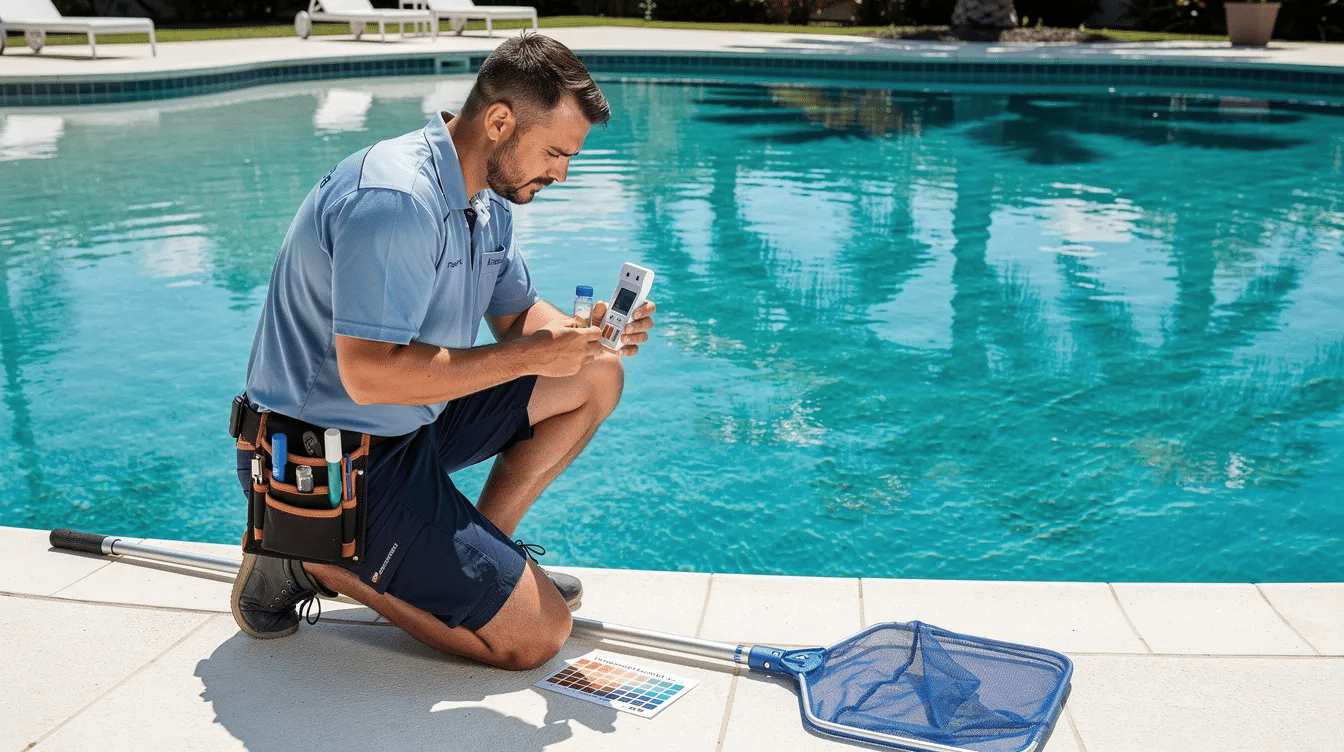
A pool can look perfect after a service visit and then begin turning cloudy, losing water or developing stains again within days. When recurring problems persist despite regular cleaning, home pool maintenance needs to move beyond treating the visible symptom and examine how water balance, circulation, equipment and the surrounding environment are interacting. Repeated chemical adjustments may restore clarity temporarily, but they will not correct a weak pump, blocked filter, hidden leak or maintenance schedule that no longer suits the pool.
Understanding why a problem returns is usually more valuable than finding the quickest short-term fix. Once the underlying pattern becomes clear, the pool can be managed more consistently and with less unnecessary chemical use.
Cloudy Water Is Often a Circulation Problem
Cloudiness is commonly blamed on insufficient sanitiser, yet poor circulation can produce a similar result. If water is not passing through the filter effectively, fine particles remain suspended even when chemical readings appear acceptable. Dead areas around steps, corners and decorative features may also receive less treated water than the centre of the pool.
A technician should consider pump performance, operating hours, filter pressure and the position of return jets before simply adding more chemicals. The filter may need cleaning, but it could also be incorrectly sized, damaged or struggling with a level of debris it was not designed to handle. In some cases, extending circulation time during periods of heavy use or extreme heat can make a greater difference than repeated shock treatment.
The speed at which cloudiness returns provides useful information. Water that loses clarity soon after cleaning often points to an unresolved filtration or circulation issue rather than a one-off contamination event.
Stains Reveal What Has Been Happening Over Time
Pool stains rarely appear without a reason. Mineral deposits, organic debris, corrosion and long-term chemical imbalance can each create different markings, and using the wrong treatment may damage the surface without removing the cause.
The colour, texture and location of the stain can help narrow down the source. Deposits concentrated around the waterline may relate to evaporation and scale, while discolouration beneath metal fittings could indicate corrosion. Organic material left on a surface may create localised marks that look very different from widespread mineral staining.
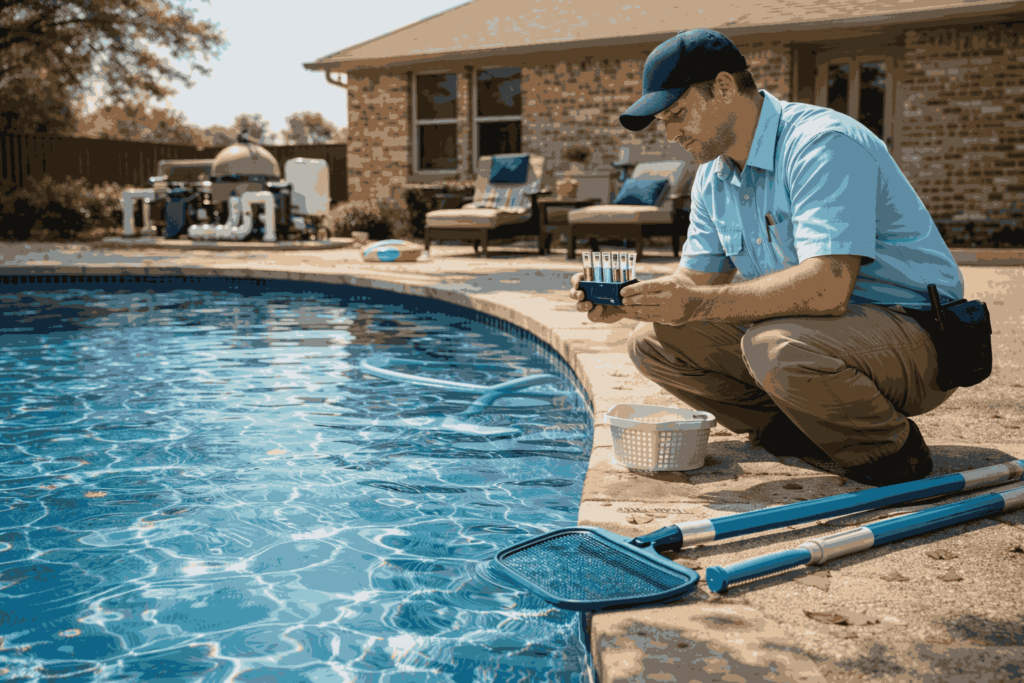
Cleaning the surface is only one part of the solution. If the incoming water contains high mineral levels or the pool remains consistently out of balance, the stain is likely to return. A useful maintenance plan records when marks develop and compares them with changes in water chemistry, topping-up and equipment condition.
Falling Water Levels Need Proper Investigation
All outdoor pools lose some water through evaporation, especially during hot, dry or windy weather. A repeated drop that appears greater than normal, however, should not be dismissed as a seasonal inconvenience.
The first step is to distinguish evaporation from leakage. Water may escape through pipework, fittings, the pool structure or equipment seals, and not every leak produces an obvious wet patch. A small loss can also draw air into the circulation system, reduce pump efficiency and gradually damage nearby ground or finishes.
Constantly topping up the pool introduces fresh water that changes the chemical balance. This can create a cycle in which the owner treats unstable readings without realising that the instability is being caused by the leak itself. Proper diagnosis therefore protects both the structure and the day-to-day water quality.
Maintenance Should Change With the Pool
A routine that worked several years ago may no longer be appropriate. Trees mature, nearby construction adds dust, equipment ages and the number of swimmers changes. Even a new cover or landscaping project can alter how much debris enters the water and how quickly chemicals are consumed.
Service records are particularly valuable because they show whether chemical demand, filter pressure or water loss is gradually increasing. Patterns that are difficult to notice from one visit become clearer when several months of information are reviewed together.
Recurring pool problems are rarely solved by doing more of the same. A better approach connects what is visible in the water with what is happening inside the circulation system and around the property. Once maintenance responds to the cause rather than the symptom, the pool becomes easier to keep stable and far more predictable to own.